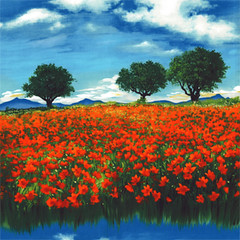
Leaving aside 19th century China, that had a population at that time 15 times larger
than today’s Afghanistan, no other country in the world has ever produced narcotics on such a deadly scale.
Sounds a little alarmist. But then, so was their 2004 report, the press release for which began:
This year, opium cultivation in Afghanistan has increased by 64 per cent compared to 2003, according to the Afghanistan Opium Survey 2004, released today by the United Nations Office on Drugs and Crime (UNODC).
“In Afghanistan, drugs are now a clear and present danger”, stated Antonio Maria Costa, Executive Director of the UNODC.
Announcing the Survey findings during a press briefing in Brussels, Mr. Costa added, “With 131,000 hectares dedicated to opium farming, this year Afghanistan has established a double record -- the highest drug cultivation in the country’s history, and the largest in the world.”
As to what should be done, here's what the Executive Director said in 2004:
“In counter-narcotics, there is no silver bullet. The opium economy in Afghanistan has to be dismantled with democracy, the rule of law and economic improvement -- it will be a long and difficult process. It cannot be done ruthlessly as it was done by the Taliban, nor with mindless disregard for the country's poverty. It would be a historical error to abandon Afghanistan to opium, right after we reclaimed it from the Taliban and Al-Qaida”, concluded UNODC’s Executive Director.
Here's what Mr. Costa says today:
"The Afghan situation looks grim, but it is not yet hopeless," the drug agency's executive director, Antonio Maria Costa, said in a prepared statement. He cited evidence that several provinces in central and northern Afghanistan have eradicated their opium fields. The northern Afghan province of Balkh has seen a decline in opium cultivation from 17,000 acres to zero. The report attributes the drop to economic incentives and security guarantees that "have led farmers to turn their back on opium."